Operational Performance Diagnostic (OPD) Overview
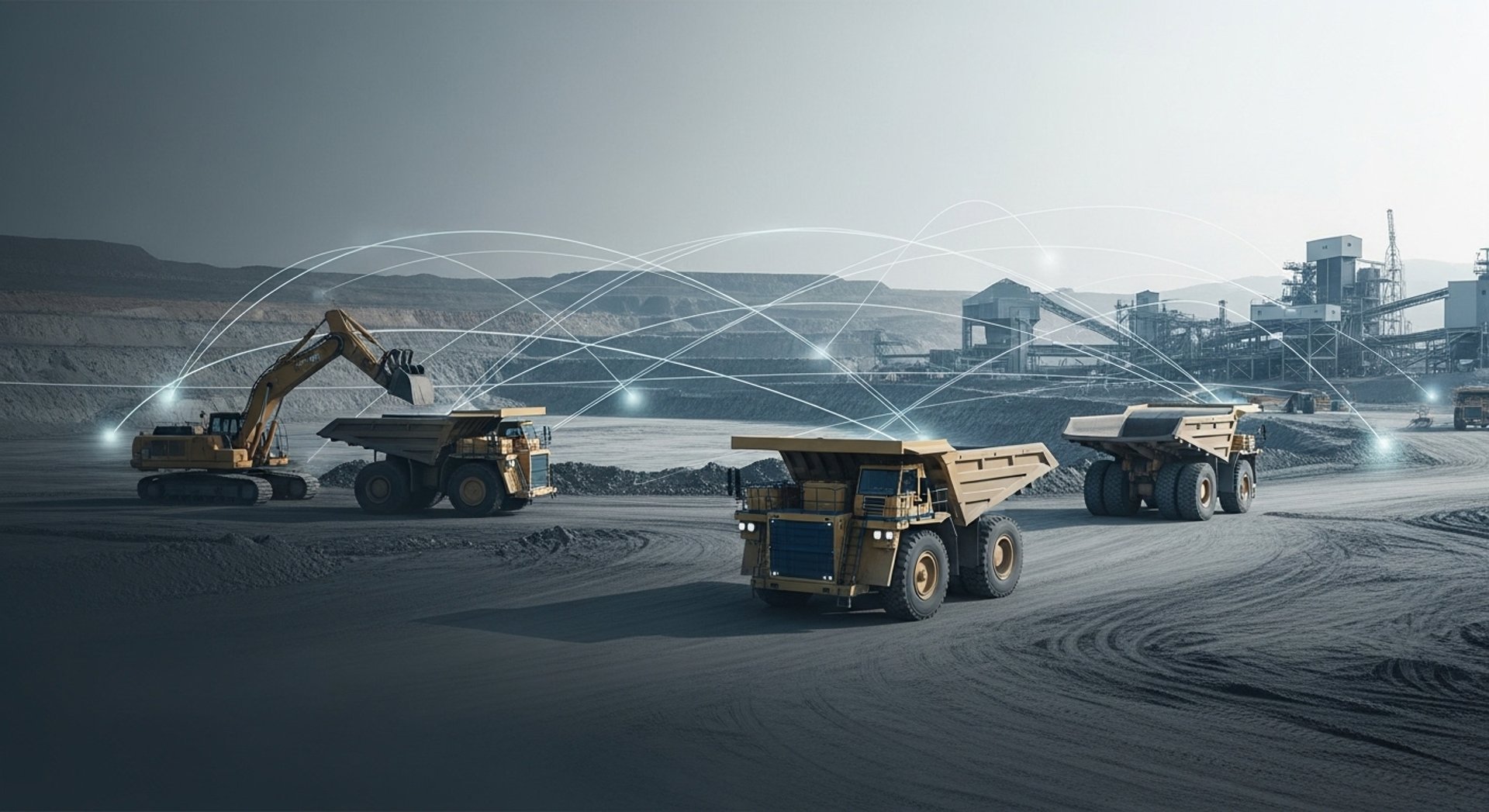
We conduct a comprehensive Operational Performance Diagnostic (OPD). This is not a generic software audit or point-solution pitch. It is a detailed assessment across four dimensions that matter to your bottom line.
Value ranges (with caveat)
Comparable operations have reported substantial gains from integrated optimisation; however, outcomes are site- and ore-domain dependent and must be verified. Typical reported ranges include:
Reported mill throughput improvements (often in the ~10-20% range in successful deployments) through better fragmentation, feed preparation, and constraint-focused mill operation.
Reported specific energy reductions (often in the ~5-15% range) through grinding circuit optimisation, smarter crushing strategies, and reduced rework/recirculating load.
Potential reduction in energy-related emissions intensity where power and diesel waste are reduced; magnitude depends on the site energy mix and the verified energy improvement.
Potential maintenance and downtime improvements to reduce instability and unplanned events; the magnitude depends on current failure modes and operating discipline.
Publicly reported example: Newmont has disclosed that resolving bottlenecks in the crushing, grinding, and flotation circuits at its Peñasquito operation increased annual throughput by 7% (vs 2020), translating into more than $300 million in annual free cash flow improvements.
Four Diagnostic Dimensions
Data
People
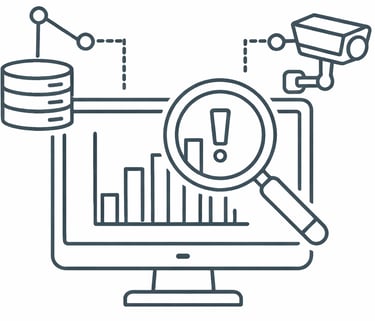
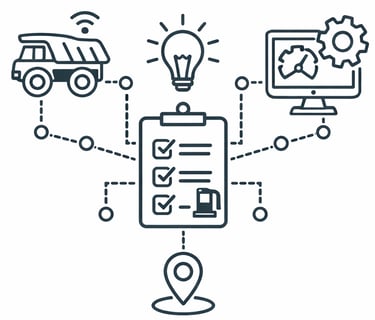
We identify which data streams are most valuable for performance improvement and where better collection (e.g., high-resolution sensors, real-time monitoring) would unlock greater clarity. Your operational data becomes actionable intelligence rather than a storage liability.
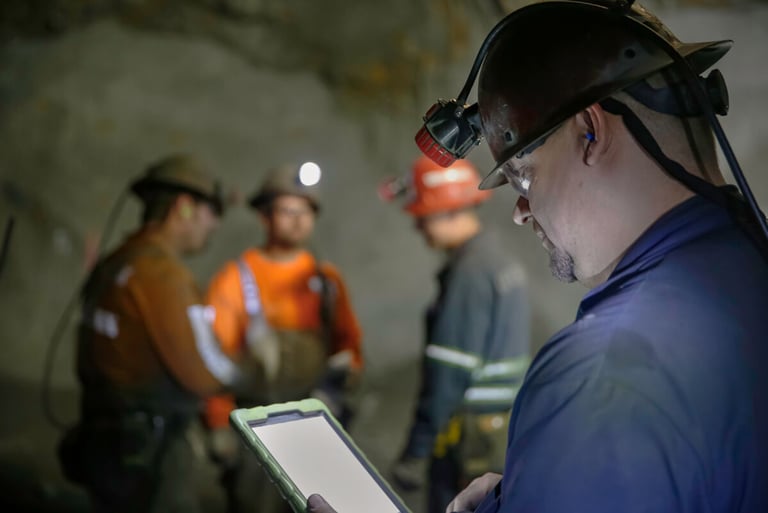
Operator training and standard operating discipline can materially improve stability and repeatability, particularly where advanced control is available but underused. We identify capability gaps and recommend targeted training to help your team fully exploit new capabilities.
Technology
Process
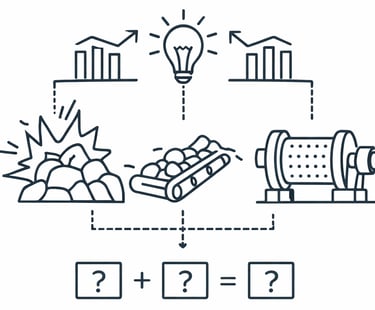

Published deployments and case experience suggest that advanced control and optimisation can materially improve stability and constrained throughput while reducing specific energy, but outcomes are site-specific. If haulage is the constraint, dispatch and routing optimisation can reduce avoidable delays and fuel waste. Every recommendation is grounded in the expected value for your site and validated through baseline + M&V.
We analyze your mining, crushing, and milling practices to find where inefficiencies live. If your blast design is not optimized for mill feed, we calculate exactly how much throughput you could gain by adjusting blast parameters. If your grinding settings are wrong, we model the improvement in tonnes per hour and energy consumed per tonne. We use comminution modelling to run what-if scenarios and show the tangible impact on your economics. The output is a quantitative map showing which process changes would yield real value.
Data Checklist
Fleet management/dispatch: payload, cycle time components, delays, speeds, and (where available) fuel.
Plant historian: throughput (tph), power, key control tags, downtime categories, and product size/quality where available.
Blast and geology: blast design parameters, powder factor proxies, timing where available, ore domain/hardness proxies, and blend identifiers.
Maintenance/events: major downtime, unplanned events, and operating mode flags to support a clean baseline.
Minimum Viable Dataset


Deliverables + Measurement & Verification
M&V
Measurement & Verification (M&V): Baselines are normalized by ore domain (hardness/blend), major downtime, and operating mode. Verification uses pre/post windows and, where possible, controlled trials or phased rollouts. Value is only claimed when KPI movement is attributable and sustained.
At the conclusion of the assessment, you receive
A prioritized roadmap showing which initiatives to undertake and in what sequence, based on financial return.
Business cases for each recommendation: specific AUD millions in annual savings, tonnes of throughput increase, kWh per tonne energy reduction, and implementation timelines.
Technical validation against your specific site conditions. The savings are not industry averages; they are calculated for your ore type, equipment configuration, and current performance baseline.
Implementation guidance and support through a 12-month monitoring period, ensuring you capture the value we identified.
Timing + How to proceed
How to proceed
Schedule a 45-minute conversation with our team to discuss your site, current challenges, and the cost of an assessment for your specific operation.
If the investment makes sense, we define the scope, access your operational data, and schedule site engagement over the next three months.
You receive a diagnostic report with a prioritized roadmap, financials, and implementation guidance that you can act on immediately.
The conversation costs nothing. The diagnostic investment is a fixed fee. The return on clarity is substantial.
Why act now
Mining economics are tightening. Grades are falling. Energy costs are rising. Margins are shrinking. Every quarter you operate below your potential, you cost yourself hundreds of thousands of dollars. The competitive advantage in mining increasingly goes to operators who understand that haulage, crushing, and milling are not separate problems. They are one system. Organizations that make that shift now gain a high cost and efficiency advantage over competitors still optimizing in silos.
Typical elapsed effort is 20-30 working days once data access is in place. In calendar terms, the diagnostic usually completes in 6-12 weeks, depending on site access, data latency, and stakeholder availability. The output is a decision-ready roadmap and business case pack for the next quarter.
Schedule your free 45-minute diagnostic conversation to begin.
Contact
Reach out for expert mining insights
Phone
info@continuumops.com.au
+61 (07) 3870 9609
© 2026. All rights reserved.