
Typical Improvement Ranges and Caveat
Comparable operations have reported substantial gains from integrated optimisation; however, outcomes are site- and ore-domain dependent and must be verified. Typical reported ranges include:
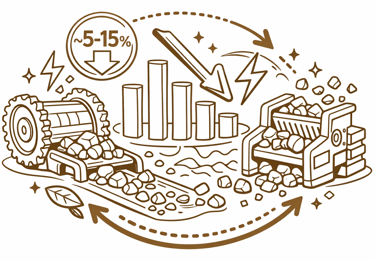
Reported specific energy reductions (often in the ~5-15% range) through grinding circuit optimisation, smarter crushing strategies, and reduced rework/recirculating load.
Potential reduction in energy-related emissions intensity where power and diesel waste are reduced; magnitude depends on the site energy mix and the verified energy improvement.
Reported mill throughput improvements (often in the ~10-20% range in successful deployments) through better fragmentation, feed preparation, and constraint-focused mill operation.
Potential maintenance and downtime improvements to reduce instability and unplanned events; the magnitude depends on current failure modes and operating discipline.
Publicly reported example: Newmont has disclosed that resolving bottlenecks in the crushing, grinding, and flotation circuits at its Peñasquito operation increased annual throughput by 7% (vs 2020), translating into more than $300 million in annual free cash flow improvements.




Proven Across Ore Types & Scales
The Continuum Physics methodology has been applied across:
Porphyry copper systems
Carlin-type gold deposits
Skarn polymetallic operations
Carlin-type gold deposits
From mid-tier operations to large-scale processing plants exceeding 100 ktpd, CPS-driven diagnostics consistently identify structural value opportunities.
Case Studies
Operational Context
Bottlenecks across crushing, grinding, and flotation limiting annual production performance.
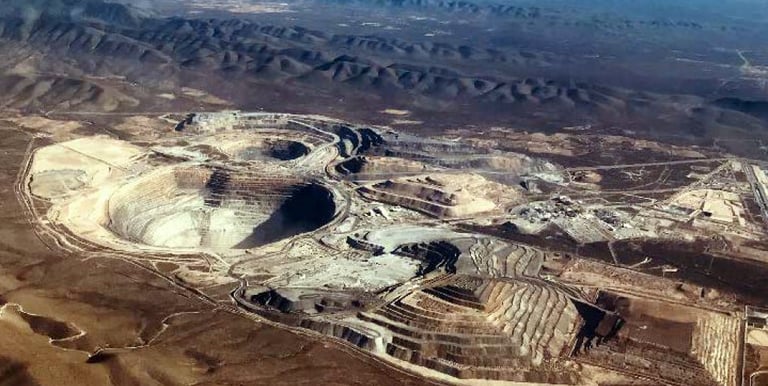
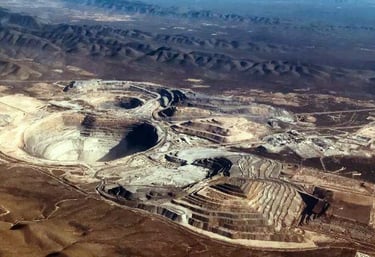
Peñasquito - Polymetallic (Au-Ag-Zn-Pb)
Operation: Newmont
Processing Scale: ~130 ktpd large-scale concentrator
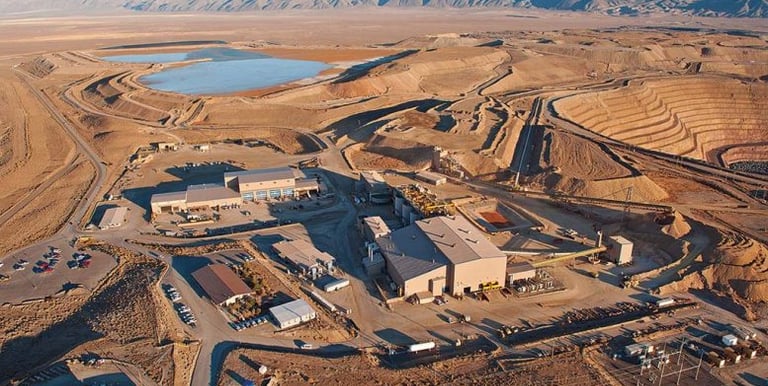
Cortez – Carlin-Type Gold
Operation: Barrick Cortez
Processing Context: High-intensity blast trials linked to mill performance
Physics Context
Cross-circuit energy and constraint analysis identified coordinated optimization opportunities across comminution and flotation stages.
Quantified Outcome
+7% annual throughput (vs 2020 baseline)
>US$300M annual free cash flow uplift
Operational Context
Fragmentation variability and blast movement uncertainty were limiting mill throughput potential.
Physics Context
Higher-intensity blasting trials revealed >US$1M incremental value potential from blast movement optimization. Integrated mine–dispatch–mill modeling showed improved energy transfer efficiency.
Quantified Outcome
+16% achievable throughput via integrated mine-to-mill strategy
>US$1M incremental value from blast optimization
Cadia Hill – Porphyry Copper-Gold
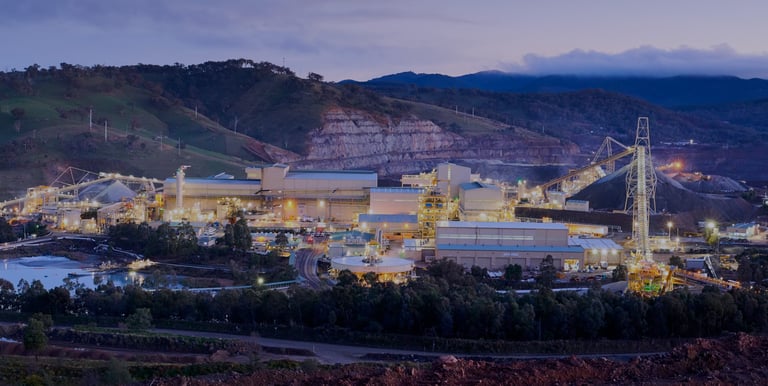
Operation: Newcrest (now Newmont)
Processing Context: SAG circuit & blast-feed control
Operational Context
Feed size variability impacting SAG mill stability and limiting throughput.
Physics Context
Drill pattern tightening, increased powder factor, and improved drilling quality reduced SAG feed from 100→80 mm.
Quantified Outcome
~10% SAG throughput uplift
~200 tph throughput increase
Improved circuit stability

Antamina – Skarn Cu-Zn
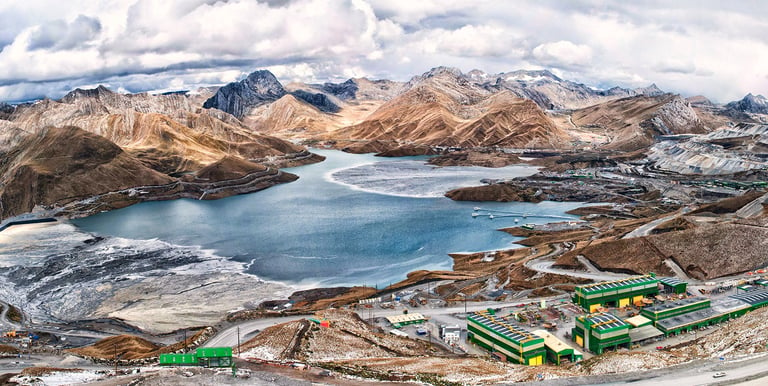
Operation: Compañía Minera Antamina
Processing Scale: Large-scale (>100 ktpd class)
Operational Context
Throughput variability and optimization opportunity across crushing and grinding.
Physics Context
Mine-to-mill optimization integrating Metso PTI analysis identified structural throughput improvement.
Quantified Outcome
+30% throughput credited to optimization
Historical context: 4,400 tph average (2011), +60% vs pre-2007
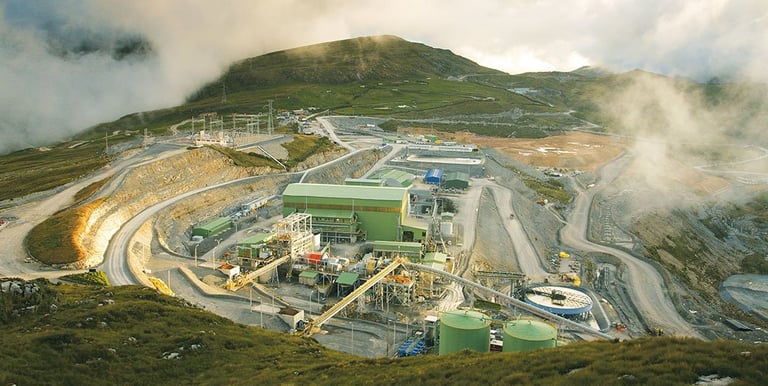
Cerro Corona – Cu-Au
Operation: Gold Fields La Cima S.A.A.
Processing Type: Hard ore campaigns
Operational Context
Throughput constraints during harder ore campaigns while maintaining grind size.
Physics Context
Process integration and optimization (PIO) aligned energy application with ore hardness profile.
Quantified Outcome
+14.8% throughput on target hard ore
+5.7% overall throughput
–9.3% SAG specific energy
Product size maintained
Contact
Reach out for expert mining insights
Phone
info@continuumops.com.au
+61 (07) 3870 9609
© 2026. All rights reserved.